28-03-2024
This is the first video in a new series where Istanbul Mehmet artist, Wil Wainwright goes through some cool ideas, patterns and techniques.  This time we're going to "push the one" to create a cool effect that sounds great in grooves and fills. https://youtu.be/1mGc2p-l4j4
28-03-2024
Hi everyone. I'm really excited to bring to you a brand new series of lessons looking at... rudiments! Lesson 1 looks at the correct sticking of a Paradiddle and the correct stroke types, stick positioning and stroke volumes. Future lessons will contain the correct sticking and stroke types for all rudiments. With practice, you will be able to play your Paradiddles much faster as your hands will be in the correct position at all times. This will enable you to play your Paradiddles with greater dynamic control. Also in the video, I show how a Paradiddle can be used as a groove if you play between the ride and snare and then show some different bass drum patterns you can add. You can get as creative as you like. This part of the video is simply giving you a couple of ideas to get your creative juices flowing. Why not try playing on the toms instead of the ride, or put your left hand on the hi-hats. The possibilities are endless! The video finishes off showing how to apply a Paradiddle on top of a basic rock beat. https://youtu.be/RCsh8HPaKSY After watching some of these videos, you may be surprised to find that you've been playing some of your rudiments incorrectly..  I would love to hear from you if these videos help to refine your rudiments into the finished product. I would also like to point out that I've intentionally made these videos without using notation as I don't want to exclude anyone from the learning process. Many thanks for taking the time to read this and I want you to know that lesson 2 will be looking at Double Paradiddles. Hope to see you there. Graeme
28-03-2024
Hello everyone. My name is Graeme Hare and I'm a drummer/teacher from the North East of England. I've recently joined the Istanbul Mehmet family and this is my first blog. I just wanted to say hi, introduce myself and outline the content of future blogs. I picked up my new cymbals this morning and had some promo pictures taken with the team at drumshop UK. Huge thanks to Carl Thomson from Istanbul Mehmet and Andy Anderson from Drumshop UK for their help setting this up and putting faith in me.I won't let you down! Really looking forward to promoting these fantastic cymbals! Pushing my Youtube content featuring Istanbul Mehmet cymbals is a big part of my overall plan. I've already started creating backing tracks for the new Trinity College drum grades that will help teachers and students across the world. Here's one of the finished backing tracks. Future videos will feature footage of me playing Istanbul Mehmet products. Watch "Triple Decker. Grade 2. Trinity College. Slow and fast backing track." on YouTube https://youtu.be/TMlcQXYnvOI I'm about to start recording and filming the next video this weekend. As for future blogs/content, I thought I would write about how I make my living as a pro drummer and everything that goes with it. Including all the different type of gigs I play on, teaching, business, how Covid has affected the gigging scene etc, etc. I hope you will find this sort of thing useful? I like to think I can give some good advice to aspiring young drummers trying to make it as I've been playing for 34 years and I've made a living from drumming for about 26 of those years. Feel free to interact with me on this platform, facebook or any of the other social media possibilities. Best wishes Graeme
28-03-2024
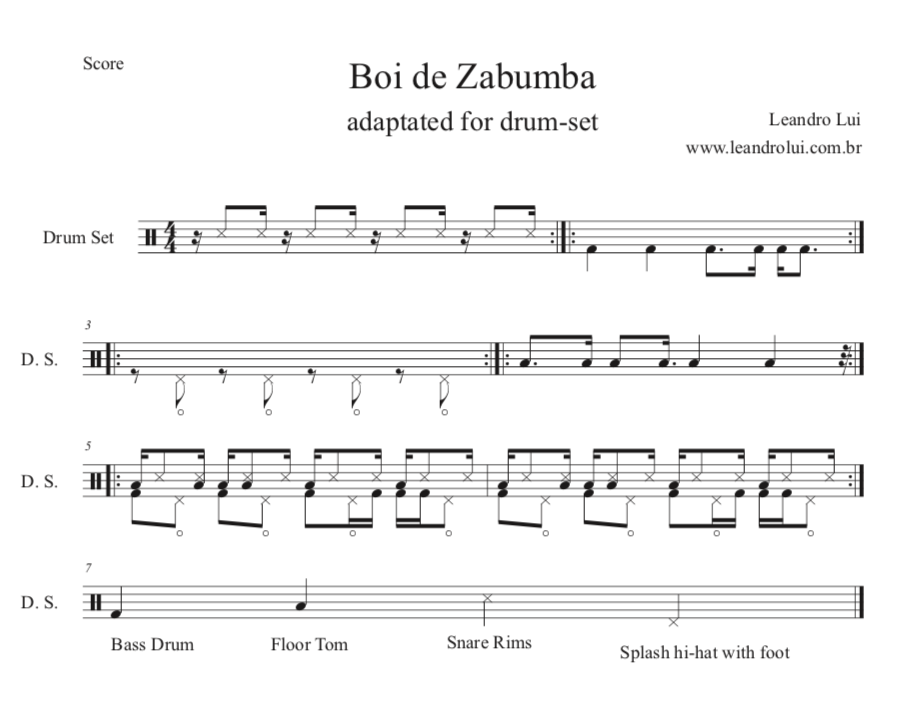
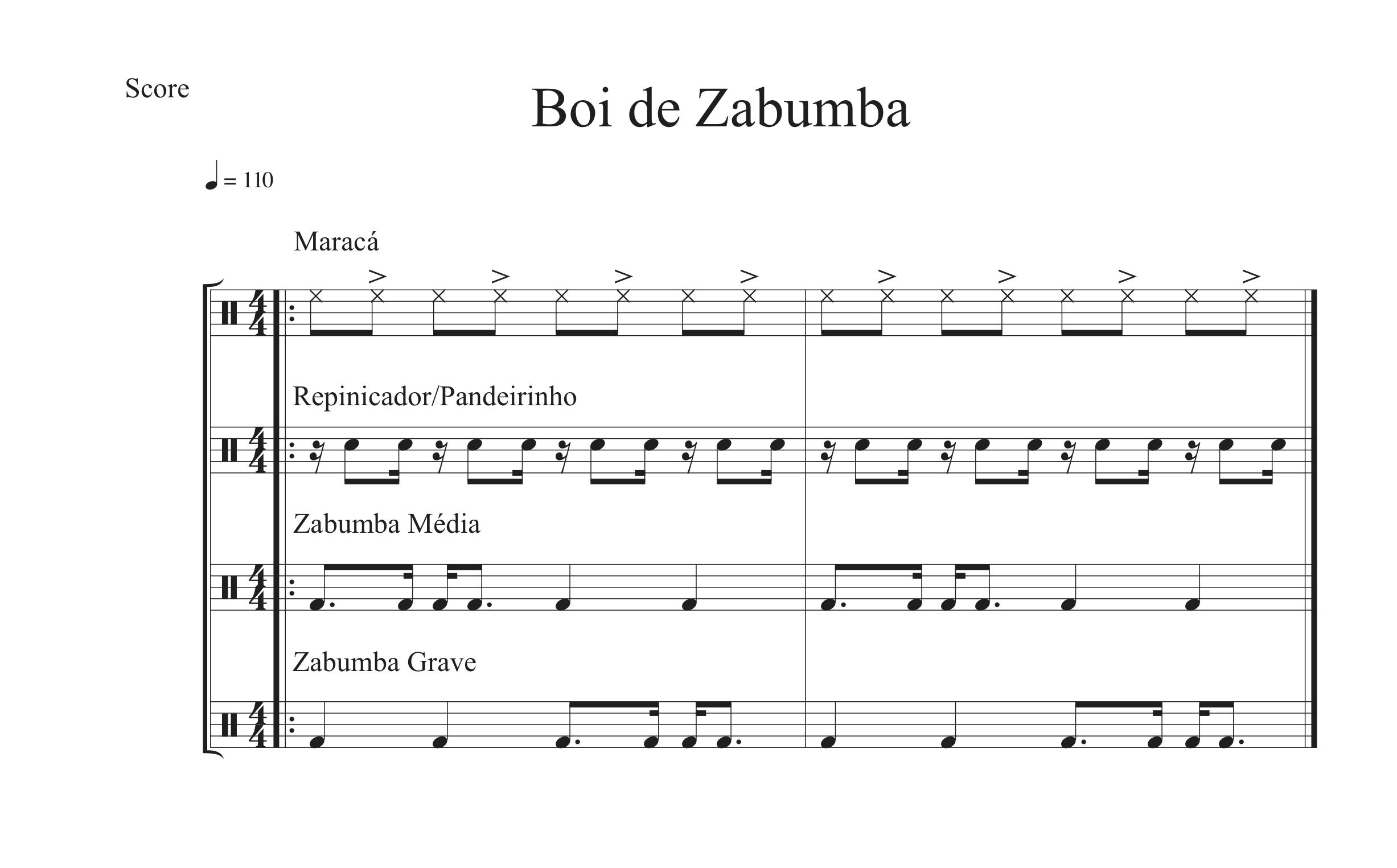
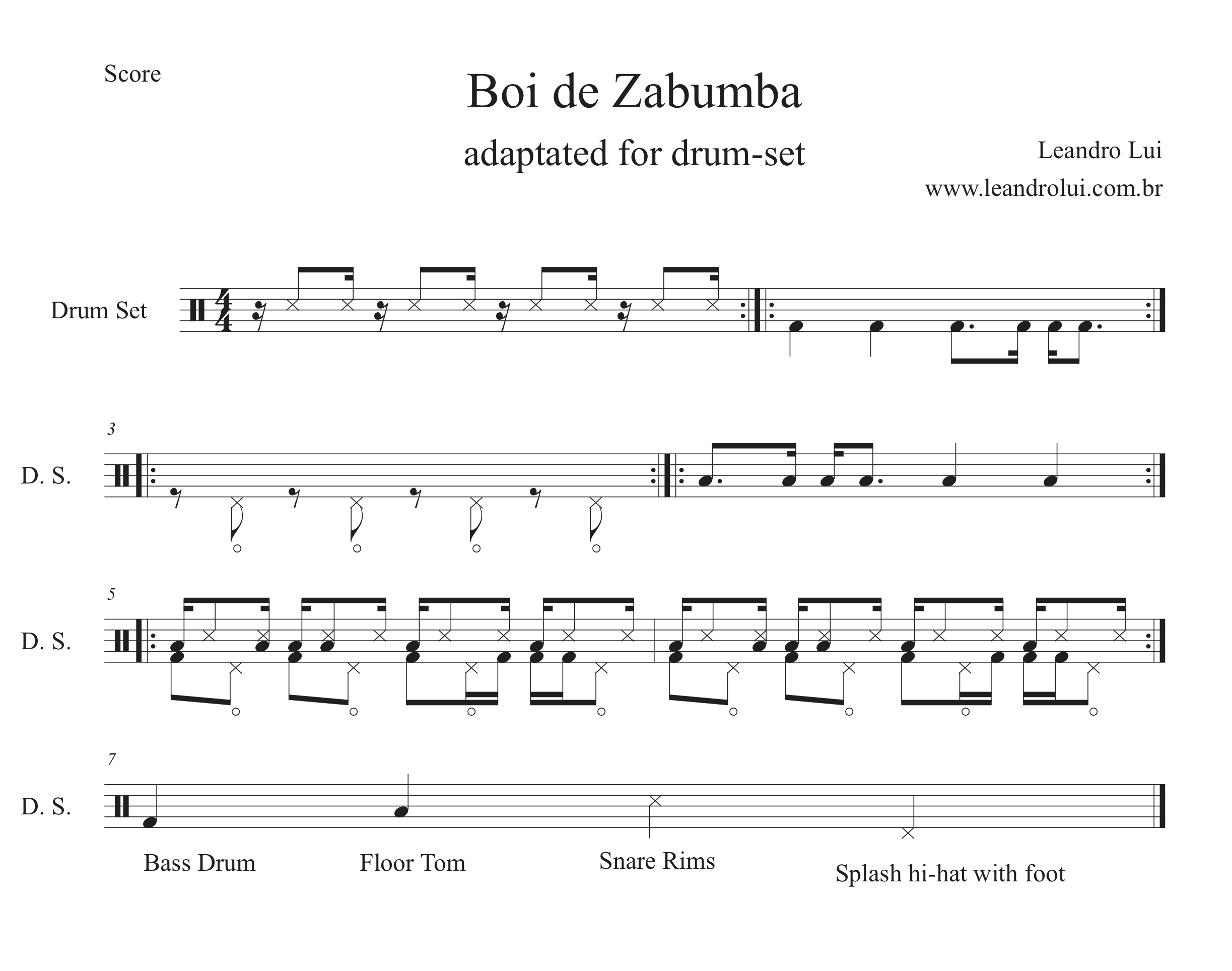
The Boi de Zabumba” (Zabumba’s Ox), also known as the Guimarães Accent or Baixada Accent, had its origin in the municipality of Guimarães, in the coast of the state of Maranhão, northeast Brazil. This rhythm, also called accent, is characterized by the presence of zabumbas (bass, mid and high drums), as well as other percussion instruments: pandeirinho or repinicadores (kind of very little drum) and maracás (kind of shaker). This accent is perhaps the oldest accent of the Maranhão “Ox” and the one that most maintains its tradition. For this reason, it was almost extinct a few years ago because of current cultural policies. Since 1994 it happens “Bumba Meu Boi de Zabumba Festival” that takes place annually in Maranhão. It was created by master Basilio Durans to rescue the roots of Zabumba accent in order to not be extinguished. Check out the following video: https://www.youtube.com/watch?v=DHCV3-WVu3U&t=594s Basically, Zabumba's Ox Accent is played this way: Boi de Zabumba Grade Drum adaptations are transpositions of instruments that have a certain familiarity of tuning and timbre, so that the rhythm resembles as much as possible when played by a single musician, and one of the ways I hear it goes like this:   Boi de Zabumba Bateria - Score You can check out the rhythm of the drums-adapted "Boi de Zabumba" in the video below:   https://www.youtube.com/watch?v=MuNYZFJdjBM   Since there are no rules on how to adapt Brazilian rhythms to the drums, you can listen to the "Boi de Zabumba" and, while doing so, you can explore your own creativity and develop the rhythms presented here in your own way.   See you soon, Lui   Leandro Lui has a specialization in Brazilian popular music and a bachelor’s degree in drums. Perform with Santo André Symphony Orchestra as percussionist, Filarmônica de Pasárgada as drummer, professor at the Mozarteum College of Music and author of the books “Dialects, ten duets for two drum sets on the brazilian rhythmic imaginary”, “Takano, for two drum-sets” and co-author of the book “10 by 2, studies for two drum-sets”. Leandro Lui is an artist  Istanbul Mehmet Cymbals, Nagano Drums and Contemporânea Percussion. www.leandrolui.com.br      
Newsletter

Register to be informed about fairs, organizations, announcements and current information.

Within the scope of commercial electronic message permission, I allow e-mails to be sent to me regarding promotions and campaigns.

Contact Us

For support, questions or feedback, mail us at

  • SANAYI MAHALLESI (EVREN OTO SANAYI SITESI) 1691 SOKAK NO.5-7-9, HOŞDERE YOLU 34510 ESENYURT- ISTANBUL / TURKEY
  • 90 212 672 16 01 - 672 65 22
  • info@istanbulmehmet.com